Fit confidence
Shoppers need dimensions in context, including room scale and doorway measurements, rather than numbers alone.
Final capstone · UX research + product strategy
Sustainable furniture, clearer decisions, calmer spaces.
01 · The challenge
Online furniture shopping creates uncertainty at the moment a customer needs confidence. Dimensions can feel abstract, delivery details often appear late, and similar options make comparison harder.
How might we help shoppers move from inspiration to purchase with clearer information about fit, total cost, delivery, and style?
02 · Research
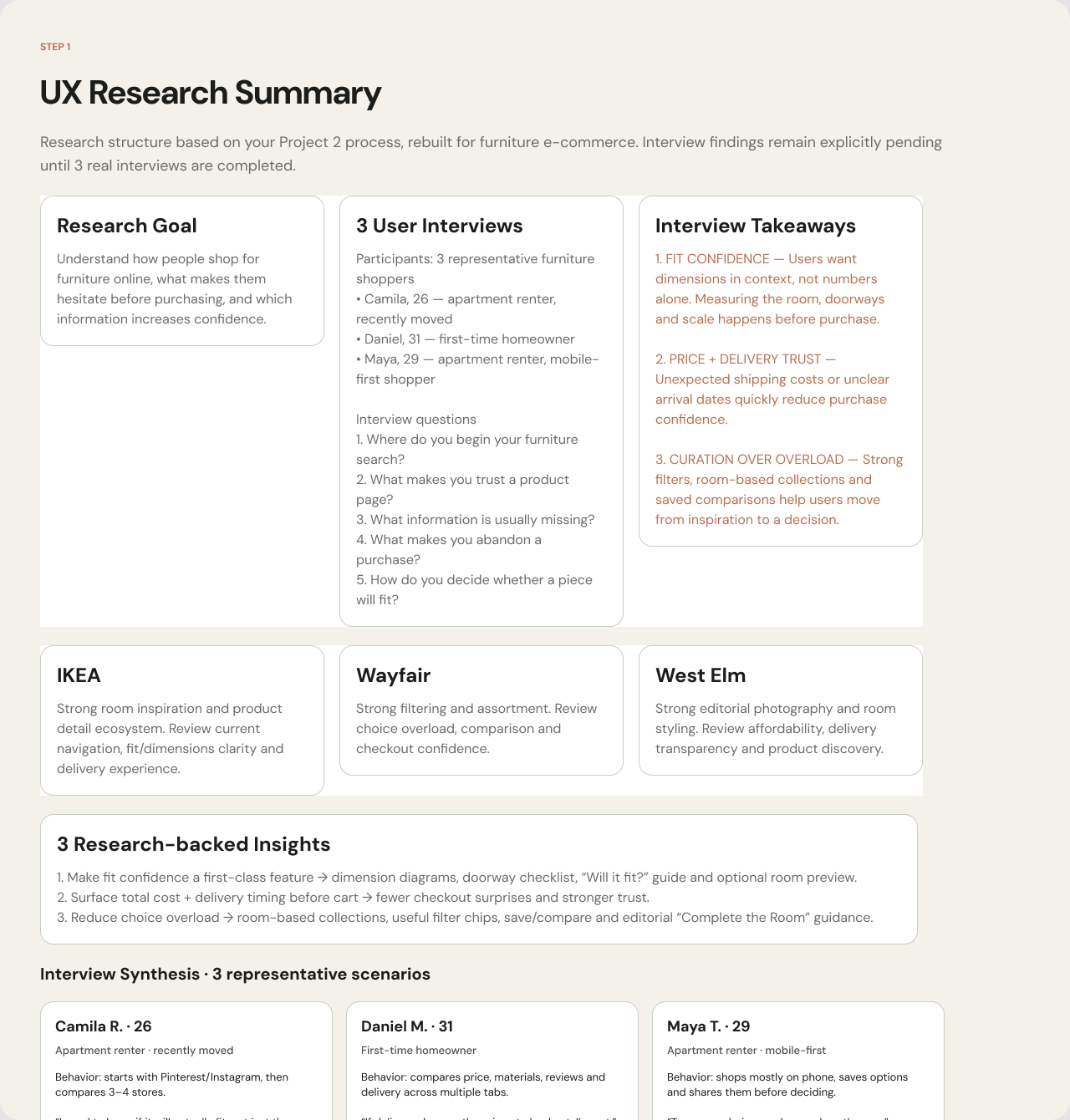
Shoppers need dimensions in context, including room scale and doorway measurements, rather than numbers alone.
Unexpected costs and unclear arrival dates reduce confidence before the customer reaches the cart.
Useful filters, room-based collections, and saved comparisons make a large catalog easier to navigate.
03 · Define
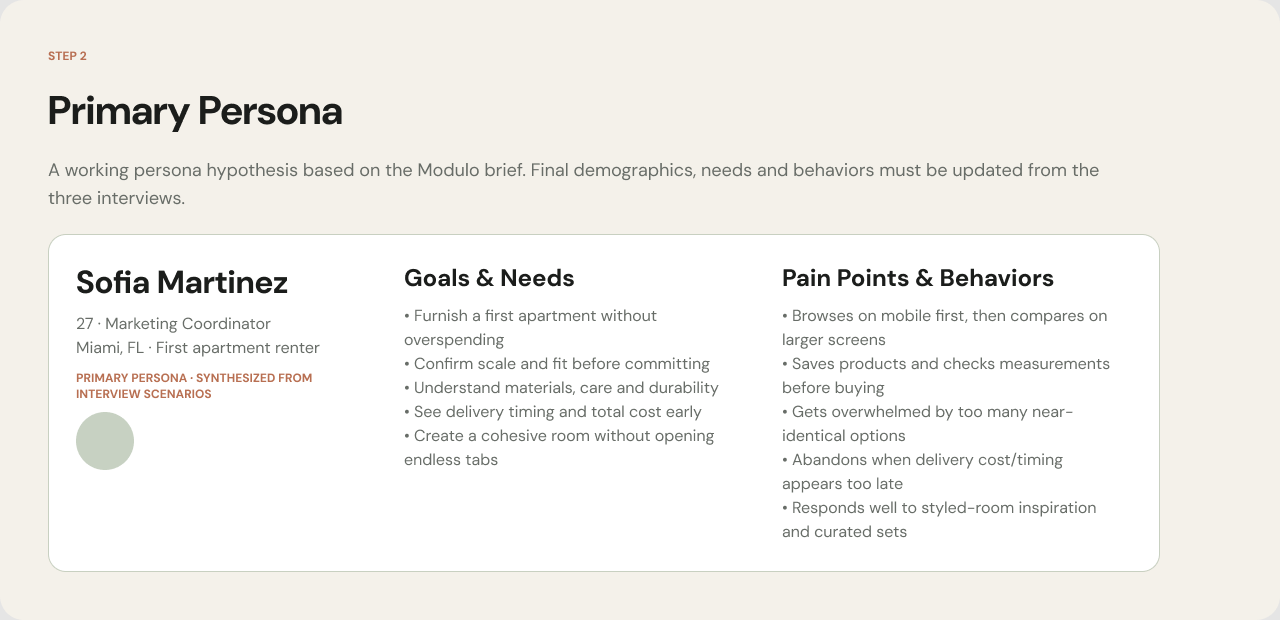
“I want a home that feels intentional, but I don’t want to guess whether a sofa will fit.”
Sofia Martinez · Primary persona
04 · Journey
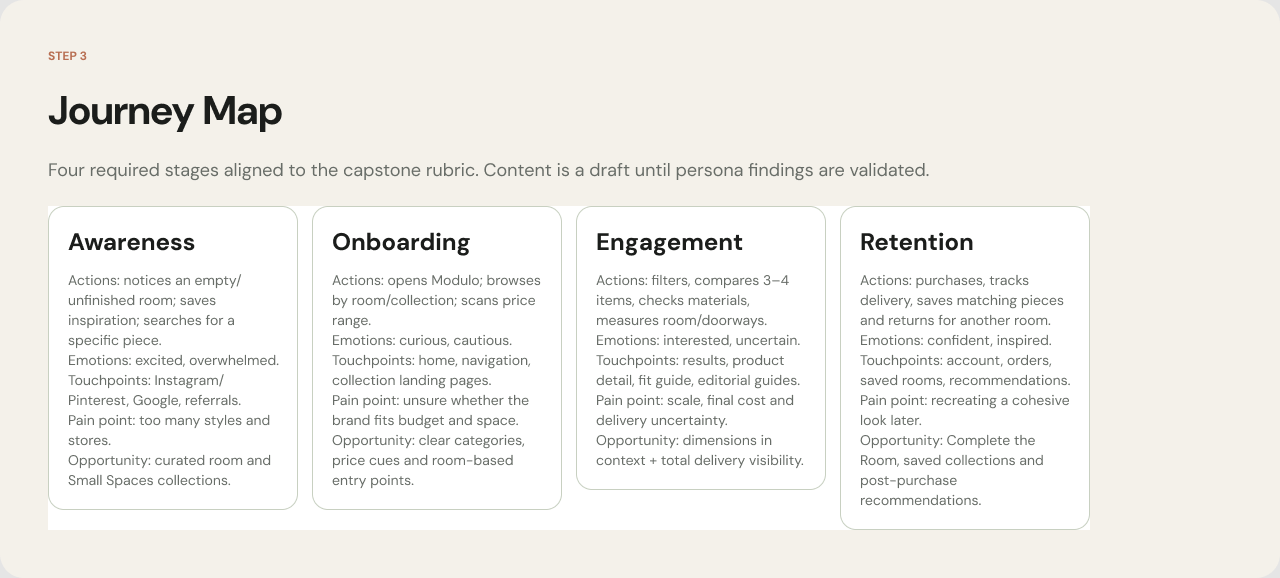
The journey connects four stages—awareness, onboarding, engagement, and retention—to the actions, emotions, touchpoints, pain points, and opportunities that matter at each moment.
05 · Structure
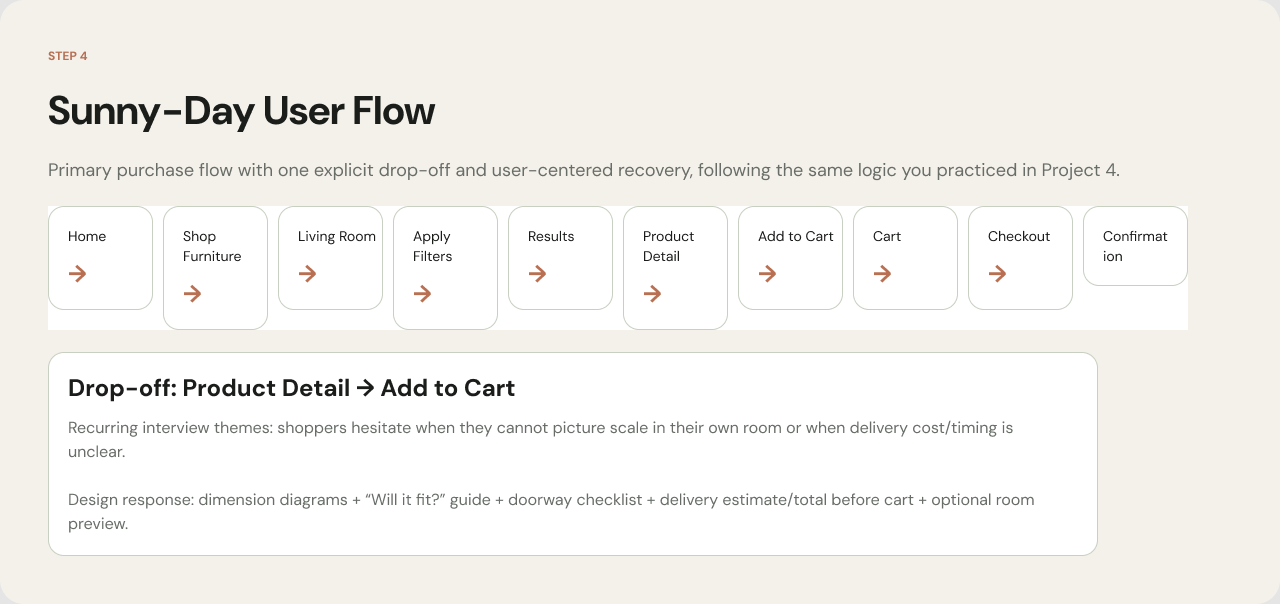
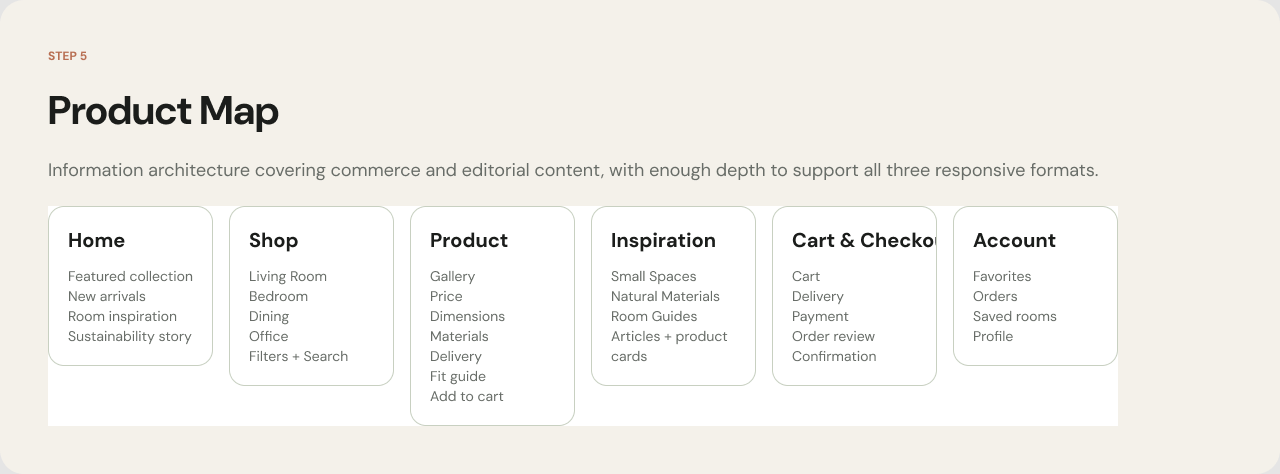
The primary flow moves from Home to Shop, Filters, Product Detail, Cart, Checkout, and Confirmation. The critical drop-off appears between product detail and add to cart, when fit and delivery uncertainty are strongest.
The design response brings dimension guidance, doorway checks, and delivery estimates forward—before the shopper must commit.
06 · Product decisions
Dimension diagrams, a doorway checklist, a “Will it fit?” guide, and an optional room preview turn measurements into usable context.
Delivery cost and timing appear before cart, reducing the late surprises that cause abandonment.
Room-based collections, focused filters, save-and-compare tools, and “Complete the Room” guidance reduce choice overload.
07 · Outcome + reflection
The clearest opportunity was not another product feature. It was moving essential information—fit, total cost, and delivery—to the exact point where hesitation begins.
Validate the representative scenarios through live interviews, test comprehension of the fit guidance, and refine the complete prototype from those findings.